REY Cybersecurity Academy

CYBER  FORENSICS  &  CYBERSECURITY RESEARCH LAB

Hack. Defend. Engineer.

One flagship program: the Advanced Cybersecurity Engineer track. 24 modules, 9 live labs — $750 for training, $1,050 with certification.

ENCRYPTED
FIREWALL: ON
THREAT: 0%
LAB ACTIVE

Why REY

Best Education

Programs that prepare students for industry-recognised certifications like CISSP, CEH and CompTIA Security+.

Best Teachers

Instructors with real-world experience offer practical insights and case studies, bridging theory and practice.

Best Mentorship

Expert mentors provide personalised guidance and career advice, helping students reach their goals.

Best Online Training

Online delivery offers the flexibility to learn at your own pace and schedule, around any lifestyle.

Flagship program

Cybersecurity Engineer Program

One program, end to end: from the CIA triad to live exploitation, from blue-team defence and SOC operations to AI and cloud security — closing with a full capture-the-flag engagement. 24 modules, 120 hours of training, 9 supervised labs, one career-grade credential.

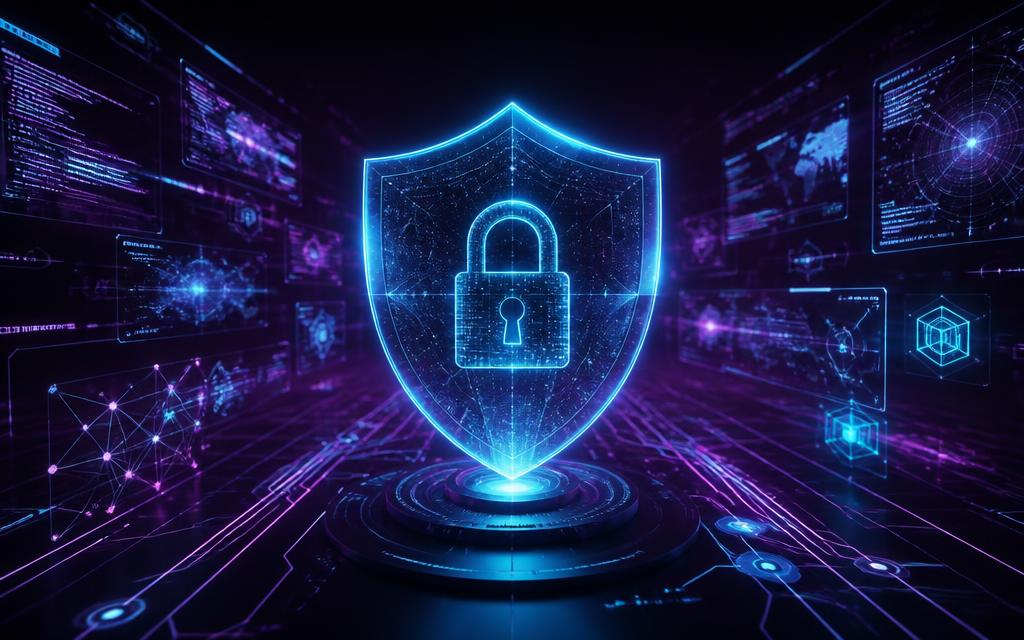
Neon holographic shield and digital lock surrounded by cyber defence dashboards

24

Modules

9

Hands-on labs

120

Training hours

Beginner → Engineer

Level

Training Only

$750

Full 24-module curriculum with all 9 hands-on labs.

  • Live instructor-led sessions across all 24 modules
  • 9 guided labs in a dedicated virtual attack/defence range
  • Kali, Metasploit, Nmap, Burp Suite, Wireshark, Nessus, Snort toolchains
  • Capture the Flag finale and penetration-test report review
  • Course completion letter from the REY research lab
Enroll — $750

Training + Certification

$1,050

Everything in training, plus the graded REY engineer certification.

  • Everything in the Training Only track
  • Proctored practical exam on a live target environment
  • REY Certified Cybersecurity Engineer credential and verifiable badge
  • Graded penetration-testing report with examiner feedback
  • Mentor-led exam retake support and career guidance
Enroll — $1,050

Full curriculum · 24 modules

Every module, every lab, in order.

01Theory

Introduction to Cybersecurity

  • Overview of cybersecurity and protecting digital assets
  • Attack types: malware, phishing, ransomware, insider threats
  • Domains: network, application, endpoint, cloud
  • Security goals — the CIA triad
  • Frameworks: NIST, ISO 27001
02Theory

Introduction to Ethical Hacking

  • Black hat, white hat and grey hat hackers
  • Fundamentals and purpose of ethical hacking
  • Legal and ethical considerations: CFAA, GDPR, HIPAA
  • Bug bounty programs and responsible disclosure
  • Certification landscape: CEH, OSCP, CompTIA Security+
03Lab

Lab 1 — Setting Up the Lab Environment

  • Install and configure VMware / VirtualBox for controlled testing
  • Install Kali Linux with Metasploit, Nmap and Burp Suite
  • Configure target machines (Metasploitable, WebGoat)
04Theory

Networking Fundamentals for Ethical Hackers

  • OSI model, IP addressing and TCP/IP
  • Subnetting and CIDR notation
  • Protocols: HTTP, HTTPS, FTP, DNS, SMTP, SNMP, SSH
  • Routers, switches, firewalls, load balancers, ports and services
  • Firewalls, NAT and Wireshark fundamentals
05Lab

Lab 2 — Networking Setup & Packet Analysis

  • Build a virtual network: attacker, target, defender
  • Ping and traceroute to map network topology
  • Capture and analyse TCP/IP traffic in Wireshark
  • Write firewall rules with iptables / UFW
06Theory

Reconnaissance and Footprinting

  • Active vs passive reconnaissance
  • WHOIS, DNS, social media and job-posting intelligence
  • OSINT foundations and Google Dorks
  • Tooling: Nmap, Maltego, Recon-ng
  • Social engineering: phishing, pretexting, baiting
07Lab

Lab 3 — Reconnaissance and OSINT

  • Network mapping and service discovery with Nmap
  • WHOIS lookup, DNS enumeration and subdomain hunting
  • Google Dorking and Maltego data collection
  • Simulated phishing / social engineering exercise
08Theory

Scanning and Enumeration

  • Port, network and vulnerability scanning
  • Service version detection and OS fingerprinting
  • Tooling: Nmap, Nessus, OpenVAS
  • Enumerating SMB, SNMP and NetBIOS resources
  • DNS zone transfers
09Lab

Lab 4 — Network Scanning and Enumeration

  • Port scanning and service detection with Nmap
  • Vulnerability assessment using Nessus
  • SMB and SNMP enumeration across a network
  • DNS extraction and zone transfers
10Theory

Vulnerability Analysis and Exploitation

  • Software, hardware, network and human vulnerabilities
  • CVEs and vulnerability databases (NVD, CVE Details)
  • Exploitation fundamentals
  • Metasploit Framework for exploit automation
  • Password attacks: brute force, dictionary, rainbow tables
11Lab

Lab 5 — Exploitation and Metasploit

  • Exploit lab vulnerabilities with Metasploit
  • Develop and execute custom exploits in a controlled setup
12Theory

Web Application Security

  • OWASP Top 10: SQLi, XSS, CSRF, insecure deserialisation
  • Authentication flaws and session hijacking
  • Emerging vectors: SSRF and WebSocket vulnerabilities
  • Manual and automated testing with Burp Suite and OWASP ZAP
  • Secure coding: input validation, auth, session management
13Lab

Lab 6 — Web Application Penetration Testing

  • Intercept HTTP traffic with Burp Suite
  • SQL injection against a vulnerable application
  • Cross-site scripting and command injection
  • CSRF, insecure deserialisation and file inclusion
14Theory

Defensive Security Techniques

  • Blue team vs red team vs purple team
  • Firewalls, IDS and IPS
  • Firewall management and network segmentation
  • Endpoint security: antivirus, EDR, application whitelisting
15Lab

Lab 7 — Defensive Security

  • Configure and test an IDS with Snort
  • Implement and validate firewall rules
16Theory

Incident Response and Management

  • Detection, containment, eradication, recovery, lessons learned
  • Forensics and evidence collection, chain of custody
  • Mitigation: segmentation, patch management, backups
17Theory

Reporting and Documentation

  • Writing an effective penetration testing report
  • Communicating with technical and non-technical stakeholders
  • Responsible disclosure protocols
18Lab

Lab 8 — Defensive Security and Incident Response

  • Run incident response simulations and gather forensic data
19Theory

SOC (Security Operations Center) Overview

  • SOC tiers: monitoring, analysis, threat hunting
  • The role of SIEM
  • Tooling: ELK Stack, Splunk, AlienVault
  • Log sources: firewall, endpoint, proxy, authentication
20Theory

SOC Functions

  • Threat monitoring and incident detection
  • Event triage and escalation
  • Incident response and containment
  • Forensics, root cause analysis, reporting and compliance
21Theory

Artificial Intelligence for Cybersecurity

  • What artificial intelligence is, in practice
  • The role of AI in cybersecurity
  • Security challenges introduced by AI technologies
  • AI security controls, best practices and mitigations
22Theory

Cloud Security Fundamentals

  • Shared responsibility between provider and customer
  • Securing data, applications and infrastructure in the cloud
  • Common cloud threats and basic mitigation techniques
23Theory

Capture the Flag (CTF) Challenge

  • CTF competitions and platforms: Hack The Box, TryHackMe
  • Hands-on real-world cybersecurity puzzles
  • Applying offensive and defensive skills end to end
24Lab

Lab 9 — CTF Challenge

  • Compete in a full capture-the-flag event to close the program

About REY

A research lab and a school, in equal measure.

The REY Cyber Forensics and Cybersecurity Research Lab with Trainings stands for excellence in digital forensics and cybersecurity education. Nestled within a vibrant academic environment, the lab pairs cutting-edge research with hands-on training for aspiring professionals and seasoned experts alike.

Through workshops, certification courses and simulated exercises, participants gain practical skill in analysing digital evidence, detecting vulnerabilities and mitigating cyber threats in real-world scenarios — while seminars and symposiums keep a network of practitioners exchanging what they learn.

Cybersecurity

Protecting systems, networks and data through cryptography, network security and intrusion detection.

Cyber Forensics

Investigating digital evidence for legal purposes — data recovery, artefact analysis and tracing cyber incidents.

12,658

Students trained

9/10

Overall learner rating

85%

Successful students placed

1

Flagship engineer program

Let's get in touch

Apply now. Seats in each cohort are limited.

Website
www.reysquad.world